Sunday, October 08, 2006

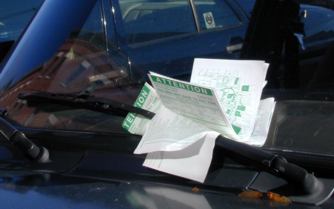
Is Portland's Parking System the Ticket for Tacoma? (II)

Portland (OR) has $5.8 billion in infrastructure facilities dedicated to transportation, but the Rose City's best assets are ones Tacoma can not only emulate, but duplicate--strong leaders committed to a common vision for how those assets may be best deployed.

Members of Tacoma's City Council on Friday heard from two of Portland's top transportation leaders during their visit to examine that system: Sam Adams and Rick Williams.

Sam Adams
Under Portland's unique structure of government, wherein each elected official is a full-time professional serving with a specific portfolio, Commissioner Sam Adams is responsible for transportation, sewers--and arts & culture. The local transportation system, as he describes it, is innovative but badly mismatched with funding; Oregon's gas tax has not increased since 1991.

Adams calls pay stations, which Portland has deployed in three urban neighborhoods, a "counterintuitive demand factor"--it seems illogical that putting barriers in front of customers and clients would stimulate, not injure, business traffic and profits. While parking congestion is the sign of a viable neighborhood, Adams contends, too much congestion means lost revenue, so forcing turnover brings more dollars into a business district. "It's a real step off the gangplank for businesses," he admits, "...[but] if you study it well and use it where there's enough demand, you'll see the turnover--[and] more money coming into businesses."

Neighborhood benefit funding, Adams contends, turns the potential negative (what he calls the "gotcha" style of enforcement) into a positive--97% of users at Portland's SmartMeters are self-policing. Merchants can set up a validation program using "smart cards" that can be funded out of neighborhood parking benefit program funds. The Rose City--like Old Pasadena--gives half the revenues beyond expenses of the program to merchants for marketing and beautification, as well as to increase off street parking, boosting their district's competitiveness. Shoppers seem to like the flexibility of the system, particularly that they can purchase time, not just lease a specific space.

Parking "gets the least amount of attention [of any transportation element] but requires the greatest amount of visioning," Adams notes, but offers opportunities for enhancement because "it's subject to numerical analysis." New technology makes parking provision "easier, flexible, more cost effective," he observes. Deployment of meters, Adams advises, should always be coupled with subsidized employee transit options and neighborhood permits, and promotion is critical.

Gathering broad stakeholder input, informed by strong analysis of current trends, should lead to development of a strategic plan that can guide not just planning but overall resource development and allocation. People don't worry about transportation planning elements like "trip avoidance", but they want to be places where there are lots of things to do--and that's how to make parking and transit use work.

"Give people alternatives, not out of political correctness, but because it really is the best way to go..."

Rick Williams
The Lloyd Center District lies across the Willamette River from downtown Portland and is easily accessible by MAX light rail, the Vintage Trolley, and several Tri-Met bus routes. Within this district is the Lloyd Center (regional shopping mall), the Rose Quarter (which includes the 12,000-seat Memorial Coliseum and 40,000-square foot Exhibit Hall, as well as the Rose Garden, a 20,000-seat multi-purpose arena), and the Oregon Convention Center.

When plans completed in 1994 projected 20,000 new jobs and 4,000 housing units coming into this district, analysis of the impacts based upon existing levels of transit use (10% of commuters using transit, known as the area's "mode split") showed that growth would close down Portland's freeways at peak hours. Rick Williams, executive director for the Lloyd District Transportation Management Association (TMA), a non-profit business association representing large and small employers, came to the rescue.

The TMA helped Lloyd District employers move from 10-21% mode split over three years; the district's current goal is an ambitious 42%. The TMA committed to buy 6000 bus passes (with a volume discount), arranged with Tri-Met (Portland's transit provider) to establish a new bus route, and accepted meters to limit parking with new funds directed to the TMA. Today the Lloyd District has won an exemption from Oregon's version of Washington's Commute Trip Reduction (CTR) law.

Every employee taken out of a parking stall leads to capacity for four customers or clients, Williams contends. Like Sam Adams, he stresses the need to look at transportation assets as key pieces of a city's economic development toolbox--a tool, not just a "nice to" part of the urban landscape. In the Lloyd District, Williams has been able to offer capacity to new development through better use of existing facilities instead of having to raise money to build new parking complexes, many of which will stand empty or underutilized in off-peak hours.

Friday, October 06, 2006

Is Portland's Parking System the Ticket for Tacoma? (I)

This post is being logged very late in the evening after a whirlwind day in Portland (OR) with the Tacoma City Council's Economic Development Committee. Accompanying Councilmembers Bill Evans, Jake Fey, Connie Ladenburg, Tom Stenger and Rick Talbert were City staff members Martha Anderson, Dana Brown, Mike Elmer, Kurtis Kingsolver, Bruce Marshall, and Ryan Petty, Downtown Merchants Group leader Marty Campbell, as well as your author and David Graybill, Mike Weinman and Katie Rose from the Tacoma-Pierce County Chamber.

The group's purpose was to learn how Oregon's biggest city funds and operates its downtown parking system. Portland is recognized as a national leader in innovative transportation solutions, and its Office of Transportation maintains $5.8 billion in infrastructure facilities from streets and structures to traffic signals and street lights. .

Ellis McCoy, Portlands Parking Operations Manager, began with an overview of the city’s current parking system:
  • Broad stakeholder input was sought during developemmnt of Portland's Center City Plan, the Central City Transportation Management Plan, and the subsequent Meter District Policy, and a portion of net revenues from parking operations are directed back into local improvements;
  • In the three meter districts, (Central City, Lloyd District, Markham Hill), Portland has 1200 pay stations under management serving 8400 spaces (about 2200 of these just in the greater downtown);
    Stakeholders develop neighborhood transportation plans with the help of staff, then Council reviews and approves the plans, subsequently establishing a district with a management entity;
  • Pay stations replaced single space meters largely to increase the number of methods available for payment;
  • Cale Parking (Portland's vendor) provides online management of parking, including transactions as they occur on the street; the firm developed the current payment system through discussion with stakeholders and now deploys wireless Internet connections with a “pay to display” system;
  • Rates range from $1.25/hr. in downtown and $1.00/hr. in Markham to $0.75/hr. in the Lloyd District; one use for the downtown's revenue is debt service on bonds for the new light rail segment currently under construction.

Ramon Corona discussed permit programs resulting from a cost-of-service review of parking operations (annually reviewed)--purposes include residential uses, construction, delivery, non-profits and public safety. Their new technology allows Portland officials much better tracking than their counterparts in Tacoma for assessment of the real cost for permits.

Thursday, October 05, 2006

Steal This Blog!

Blogs are a vital part of downtown Tacoma's social fabric and have a political impact that can help effect change. At least that's the premise promoted by Todd Matthews today in his article on blogging.

Kevin Freitas is (rightly) given prominent focus, but the BIA Blog is mentioned along with others. There's also some interesting discussion on the relative "clout" of bloggers with comments from civic leaders like Chester Trabucco and Tom Stenger. In all, Matthews continues the interesting work cited here in a former post.

Wednesday, October 04, 2006

Need Parking? Visit Portland

This Friday, the Tacoma City Council's Economic Development Committee will be meeting with the City of Portland's Bureau of Transportation System Management staff, as well as representatives from the Lloyd Center Transportation Management Association (TMA). This author and other representatives from the Tacoma-Pierce County Chamber and the Parking Advisory Committee will accompany the elected leaders and City staff on the trip.

Portland's downtown parking system has a much more robust array of revenue sources and provides better management overall than Tacoma's system, at least for now. The group is headed south to learn how Portland's system works and to consider how Tacoma's system might be improved.

Watch this blog on Friday for posts from Portland!

Tuesday, October 03, 2006

Winthrop Clean-up Begins

Two narcotics search warrants were served at the Winthrop this morning at 8:00 a.m. in two different apartments. Numerous arrests were made with evictions expected to follow. Among the arrestees were several drug dealers and users, and a sex offender staying at one of the apartments with several young women. Warrant arrests were also made, according to Tacoma Police Department (TPD) One Sector Commander Lieutenant Corey Darlington.

The sweep was led by the TPD Special Investigations Unit, and in particular case agent Officer Chris Martin, who initiated and coordinated the investigation. Police also cited the continued assistance of community member Laura Hanan, who has consistently documented illegal activity by many of the individuals arrested today.

"Those two people [among the group arrested today] have been bringing many undesirable people into this neighborhood and it is great that they are both where they belong--in jail," states Hanan. "I'm sure law abiding residents of the Winthrop also appreciate not being intimidated by these two creeps anymore as well."

The clean-up of the Winthrop Hotel continues...

Towers on the Foss

The Tacoma Planning Commission is still accepting public input on a proposal to allow Simon Johnson LLC to build four 16-story buildings on the north side of the Murray Morgan Bridge. The project proposes at least 350 apartments and condominiums, retail space, and a grocery store with four towers that would sit atop a five-story parking garage.

The proposal was adopted by the Tacoma City Council on November 16, 2004, upon a positive recommendation from the Planning Commission, but subsequent review by the Department of Ecology suggested the need for re-evaluation of the proposal to address view impacts from public and residential properties if the proposed height amendment went into effect. Homeowners in the Perkins Building have complained that the project would block their current views of the Thea Foss Waterway and Commencement Bay.

Among others, the Tacoma-Pierce County Chamber has weighed in with support for the change. Height limits act primarily to constrain the real estate market from achieving the "highest and best" intensity of development and from providing the living or working environment sought by prospective residential or office occupants. Likewise, by effectively restricting supply, these limits have the economic effect of raising the price of space (of course, other regulatory variables also come into play--setbacks and coverage, as well as the parking ratio).

"Height limits can either deter investment or push some of it to other locations, depending on the strength of the market and the regulatory regimes that prevail in alternative locations," advises Richard Ward, CEO of Development Strategies, Inc. "At the same time, by restricting supply and creating monopoly values for existing property owners, height restrictions enable landlords to command higher space rents, providing the location enjoys other benefits sought by the market."

Ward observes that height restrictions may have either positive or negative impacts depending on the relative strength of the local real estate market. Keeping a lid on heights may create "relatively squat buildings abutting each other and filling the city blocks, property line to property line, usually with a public alley for services, utility lines, and deliveries when there are multiple owners, lots, and buildings on the block [that] results in a strong, pedestrian friendly street front, provided the public sidewalks are generously proportioned." At the same time, as a consequence of the height ceiling and a lower overall building density than would be achieved without it, development tends to spread out (i.e., "sprawl").

The Planning Commission is currently conducting the re-evaluation and is expected to make a recommendation to the City Council later in 2006. The Commission is scheduled to continue the discussion of the issue at its October 18th and November 1st meetings and will conduct a public hearing on the issue December 6th (this timeline, however, is subject to change).

Monday, October 02, 2006

Winthrop Hotel Effort Gathers Steam

Since most of our readers are unlikely to attend the ongoing meetings held at 6:00 a.m. on the Winthrop Hotel project by Tim Quigg's group of local investors, Derek Young of Exit133.com plans to put up a new web site that will offer regular progress reports on the project--when that venue comes online, we will offer a link.

As a service to downtown stakeholders and others, today we'll summarize progress on the efforts by Quigg and his team to renovate Tacoma's answer to Spokane's Davenport Hotel. About 35 investors and other professionals met this morning; each individual was asked to relate how they were helping the effort gather steam. Among the responses:

  • Chester Trabucco, Tom Absher (Absher Construction) and others are developing a pro forma for the hotel renovation based upon plans being developed by Brian Fitzgerald of Thomas Cook Fitzgerald Architecture;
  • Principals will be meeting tomorrow with representatives from the Tacoma-Pierce County Affordable Housing Consortium to help delineate a plan--with assistance from real estate expert J.J. McCament--for relocating the Winthrop's current low income tenants;
  • Erik Bjornson and others are creating a legacy fund, with half the money reserved to buy artwork and antiques to grace the new hotels public spaces;
  • The City of Tacoma is establishing a Project Review Team to speed permitting for the projects resulting from this activity.

The group's pro forma currently anticipates 7500 SF of retail space, 40 condominium units and 130 hotel rooms, including a Presidential Suite on the 11th floor.

This project offers an exciting opportunity for the advocates for more affordable housing downtown to create a "win/win" that will help both low income residents and business interests.